
Maryland Bridge / Bonded Bridge for Congenitally Missing Lateral Incisors
Sometimes the best dental treatment is the one that solves the immediate problem while still protecting future options.
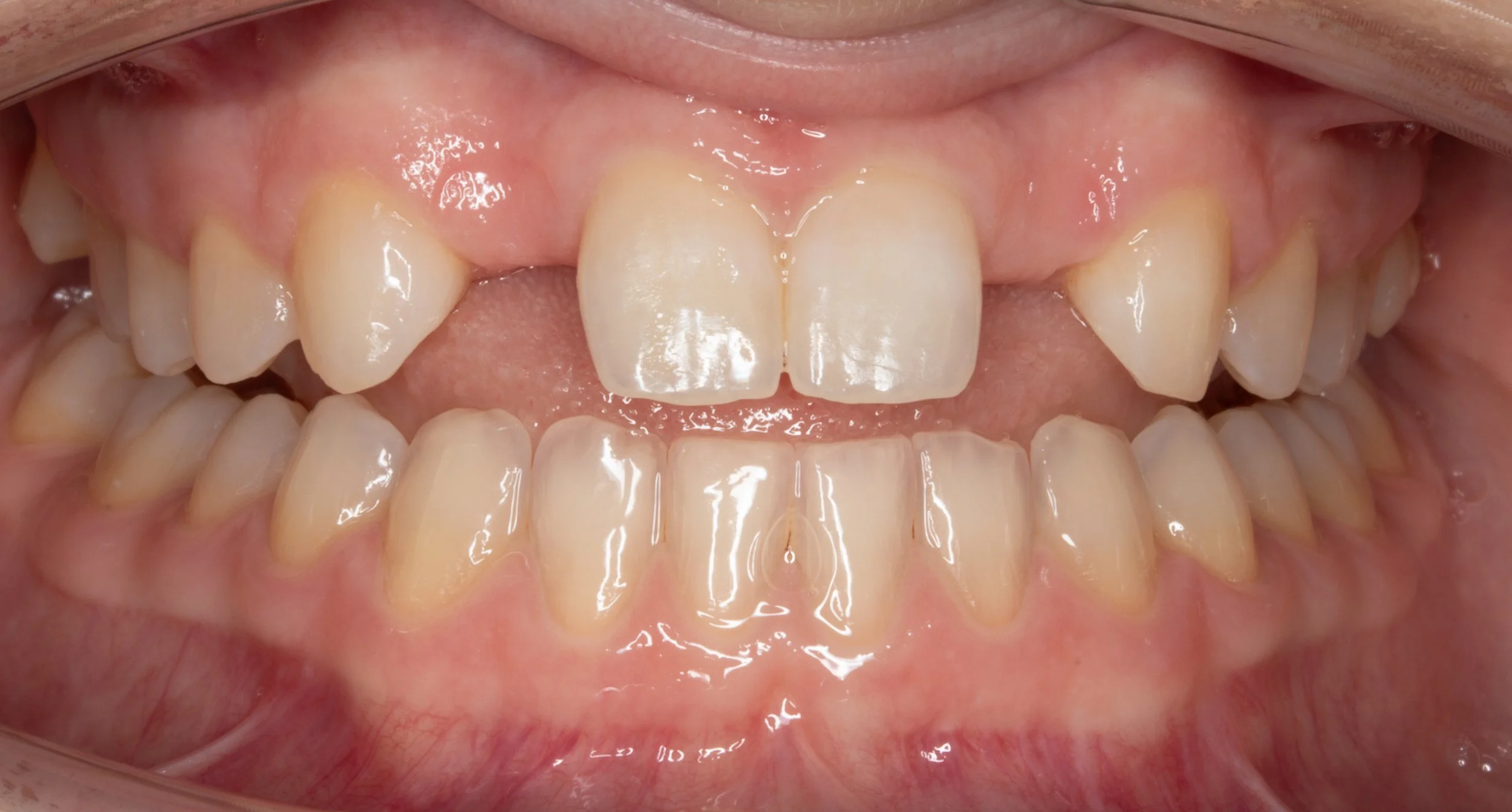
This young patient was congenitally missing both upper lateral incisors, which means those teeth were never present to begin with. Missing lateral incisors are a fairly common developmental dental condition, and they can create both cosmetic and functional challenges, especially for a young patient finishing orthodontic treatment.
This case was coordinated with Dr. Shoff, the patient’s orthodontist, and Dr. Eric Blasingame at Team Perio in Redding, California. The orthodontic plan preserved the spaces where the lateral incisors would normally be, rather than closing the spaces by moving the canine teeth forward. That approach can be very helpful because it keeps the door open for dental implants in the future, once the patient is old enough and the timing is right.
In the meantime, the patient needed a stable, fixed, cosmetic solution that did not involve wearing a removable retainer with fake teeth. That is where Maryland bridges, also called bonded bridges or single-wing cantilever bridges, can be a great option.
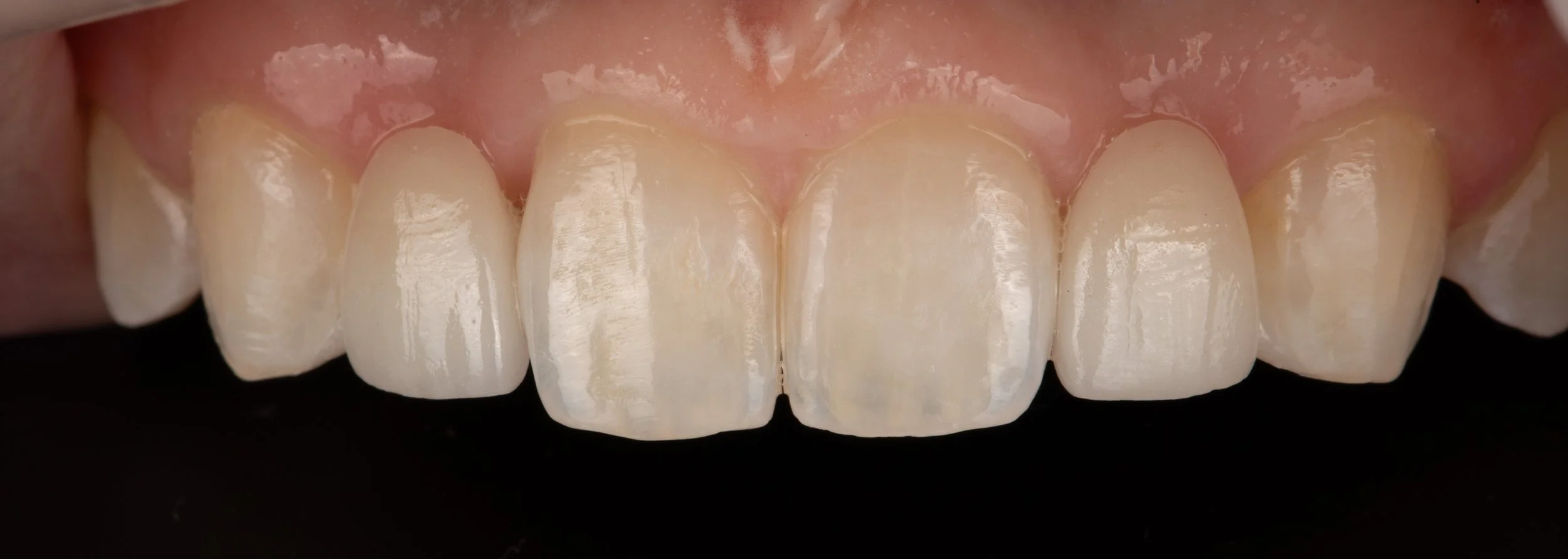
A Maryland bridge is a conservative way to replace a missing front tooth. Instead of heavily changing or preparing the neighboring teeth for full crowns, the replacement tooth is bonded to the back side of an adjacent tooth with a thin “wing.” In this case, the bridges were made from zirconia with layered porcelain on the front surface to help the color and translucency blend more naturally with the patient’s real teeth.
For this patient, the wings were bonded to the back side of the canine teeth. We prepared only a very small amount of tooth structure — just enough to give the lab room to create a strong, properly shaped zirconia wing. The goal was to be conservative while still giving the restorations the best chance to function well.
A big part of this case was shade matching. Front teeth are difficult because natural teeth are not one flat color. They have subtle variations, brightness, translucency, and texture. We took a lot of photographs at Nelson Family Dental and also sent the patient to our dental lab in Shasta Lake to work directly with Travis and his team on the shade. Combining the lab’s in-person information with our clinical photos allowed us to get a very nice match.
The other important part of the appointment was placement. With bonded bridges, positioning matters. Once adhesive is involved, everything has to be placed carefully and held steady. After bonding, we checked and refined the bite so the patient was not hitting too heavily on the wings of the bridges.
This patient’s lip position also helped the case. She does not show a very high gumline when smiling, which allowed us to design the bridges in a way that looks good while still being very cleansable. The patient can floss around the bonded bridges, which is incredibly important for long-term maintenance.
Like most real cases, the teeth are not perfectly symmetrical. The canines and central incisors have slight differences in shape and position. That is normal, and it is also why we take so many photos and evaluate these cases carefully. In the future, if the patient chooses dental implants for the missing lateral incisors, we may consider small refinements to the surrounding teeth to create even better symmetry.
For now, the goal was to give this young patient a beautiful fixed smile without something removable — and to do it in a way that keeps future implant options available. She was able to ditch the removable partial right in time for school pictures, which made this case especially fun.
At Nelson Family Dental in Redding, CA, we enjoy cases like this because they require careful planning, conservative dentistry, orthodontic coordination, lab communication, and attention to small details. These are the kinds of cases where “good enough” is not really the goal. The goal is to think through the patient’s age, future options, smile, bite, cleanability, and confidence — all at the same time.